Based on in-depth research in all aspects.



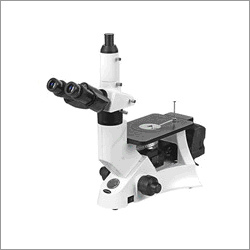
Trinocular Metallurgical Microscope
Product Details:
- Focus System Coaxial coarse & fine focus
- Spare Parts Bulb, fuse, objective lens, eyepiece
- View Head Trinocular head, 30 inclined, rotatable 360
- Features Antifungal optics, ergonomic design, stable metal base
- Theory Metallurgical microscopy
- Drawtube Trinocular
- Sensor CMOS (if camera attached separately)
- Click to View more
X
Trinocular Metallurgical Microscope Price And Quantity
- 18mm (with WF10x eyepiece)
- Approx 8 kg
- 220V/110V, 50-60Hz
- White/Grey
- Optional for reflected light
- relative humidity up to 85%
- Die-cast metal frame with chemical-resistant finish
- X-Y mechanical, low-position coaxial control
- 0C to 40C
- Quadruple revolving
Trinocular Metallurgical Microscope Product Specifications
- CMOS (if camera attached separately)
- USB 2.0/3.0 (camera dependent)
- Coaxial coarse & fine focus
- Bulb, fuse, objective lens, eyepiece
- JPG, BMP (via digital camera)
- 30mm (approx)
- Trinocular
- 45mm (standard objective focal distance)
- 100X, 200X, 400X, 1000X
- Metallurgical microscopy
- 15-30fps (with camera)
- 55 - 75mm adjustable
- Up to 5MP digital (depends on camera)
- NA 0.65, fixed condenser
- Approx 430mm x 195mm x 370mm
- 1280x1024, 1920x1080 (camera dependent)
- Up to 30mm (approx)
- Trinocular head, 30 inclined, rotatable 360
- 6V/20W Halogen or LED, reflected and transmitted
- 0.002mm/pitch
- Image sensor dependent; typically up to 5MP
- WF10x / 18mm High Eyepoint
- Rectangular, 140x110mm, mechanical movement 75x35mm
- Reflected and transmitted illumination, 6V/20W Halogen lamp or LED
- Antifungal optics, ergonomic design, stable metal base
- Plan Achromatic 10x, 40x, 100x (oil)
- Trinocular, 30 inclined, 360 rotatable
- 18mm (with WF10x eyepiece)
- Approx 8 kg
- 220V/110V, 50-60Hz
- White/Grey
- Optional for reflected light
- relative humidity up to 85%
- Die-cast metal frame with chemical-resistant finish
- X-Y mechanical, low-position coaxial control
- 0C to 40C
- Quadruple revolving
Trinocular Metallurgical Microscope Trade Information
- Cheque
- North America, Eastern Europe, Middle East, Western Europe, Africa, Central America, Asia, Australia
- All India
Product Description
In the metallurgy industry, right from the extraction of metals from mines to observing changing effects of metals, their composites and alloys, microscopic mechanism is used. Metallurgical Microscopes are used for examining several metallurgical failure mechanisms including corrosion, fatigue, creep, fractures, hydrogen embrittlement, etc. To provide you the best range, clubbing the modern technology, we are offering the range with high quality lens. The 30o inclined viewing head, quintuple nose piece and three stage testing including plain stage, mechanical stage & auxiliary stage make the microscope a smart investment. Enjoy the reliable optical functions of these Metallurgical Microscopes at your school, college, medical centers, research labs and metallurgical companies, buying it now.
Technical Specifications:
| Viewing Head | Trinocular head inclined at 30o, interpupillary distance 48-75mm |
| Eyepiece | High-point , extra wide field eyepiece EW10×/ 20 |
| Infinite Plan Achromatic Objective | 4x/ 0.1 |
| 10x/ 0.25 | |
| 20x/ 0.40 | |
| 40x/ 0.60 | |
| 50x/ 0.75 | |
| 80x/ 0.90 | |
| Nosepiece | Quintuple nosepiece |
| Stage | Plain stage |
| Attachable mechanical stage, X-Y coaxial control, moving range 120x78mm | |
| Auxiliary stage | |
| Focusing | Coaxial coarse & fine adjustment, Vertical objective movement, Coarse stroke 37.7mm per rotation, Fine stroke 0.2mm per rotation |
| Kohler Illumination | Halogen lamp 6V/ 30W |
| Filter | Blue, Yellow, Green and Ground Glass |
| Polarization Attachment | |
| Photo Attachment | |
| Video Adapter | Video adapter with C mount |
Precision Metallurgical Observation
Designed for metallurgical microscopy, this trinocular microscope enables detailed visual inspection and microstructure analysis of metals. Its quadruple revolving nosepiece coupled with plan achromatic objectives delivers crisp, high-contrast imagery, making it ideal for material science, educational, and industrial settings.
Robust and Ergonomic Construction
Built with a die-cast metal frame and a chemical-resistant finish, the microscope ensures long-term durability and operational stability. The 30 inclined, 360 rotatable trinocular head and antifungal optics facilitate comfortable, prolonged observations in academic and industrial laboratories.
Advanced Digital Imaging Capability
The device offers digital imaging features through USB-connected cameras, up to 5MP resolution, and supports real-time video (1530fps) and still images in common formats. This function is invaluable for documentation, analysis, and collaborative work, enhancing productivity in various research and quality assurance applications.
FAQs of Trinocular Metallurgical Microscope:
Q: How do I capture and save digital images with this trinocular metallurgical microscope?
A: To capture digital images, attach a compatible USB CMOS camera to the trinocular port. Use the included or recommended imaging software to save images in JPG or BMP format at resolutions up to 5MP, depending on the camera. Video capture is also supported with frame rates of 1530fps (camera dependent).Q: What benefits does the die-cast metal frame and chemical-resistant finish provide?
A: The die-cast metal frame ensures structural stability, reducing vibrations during observation. The chemical-resistant finish protects the microscope from environmental factors and accidental spills, making it suitable for both educational and industrial laboratories.Q: When should I use the optional polarizer/analyzer with this microscope?
A: The polarizer/analyzer is recommended when examining metallurgical samples under reflected light to assess grain structure, stress, and phase differences. It enhances contrast and reveals features not visible under standard illumination.Q: Where can this microscope be effectively employed?
A: This microscope is ideal for use in research labs, material science departments, industrial quality control, and academic settings. Its robust build and ergonomic design make it suitable for frequent, detailed microscopic examinations.Q: What is the process for adjusting magnification and focus?
A: Magnification is adjusted by rotating the quadruple nosepiece to select different objectives (10x, 40x, 100x oil). Coaxial coarse and fine focus knobs allow precise focusing with a range up to 30mm for coarse and fine adjustments as subtle as 0.002mm per pitch.Q: How do I maintain the microscope for optimal performance?
A: Regularly clean the optics with proper lens paper and cover the microscope when not in use. Replace spare parts like bulbs, fuses, or lenses as needed, and ensure the antifungal optics remain clear, especially in humid environments.Tell us about your requirement

Price:
Quantity
Select Unit
- 50
- 100
- 200
- 250
- 500
- 1000+
Additional detail
Mobile number
Email

Other Products in 'Professional Microscope' category



QS METROLOGY PVT. LTD.
Delhi, India
Delhi, India

Address
- PLOT NO.49, PHASE - IV, SECTOR-8, IMT MANESAR, Gurugram - 122050, Haryana, India

Contact Number
- Phone : 08045800532

Key Personnel
- Mr Bob Albin (Director)
- Mobile : 08045800532
- Send Inquiry
 Send Inquiry
|

|
 |
QS METROLOGY PVT. LTD.
All Rights Reserved.(Terms of Use) Developed and Managed by Infocom Network Private Limited. |
